
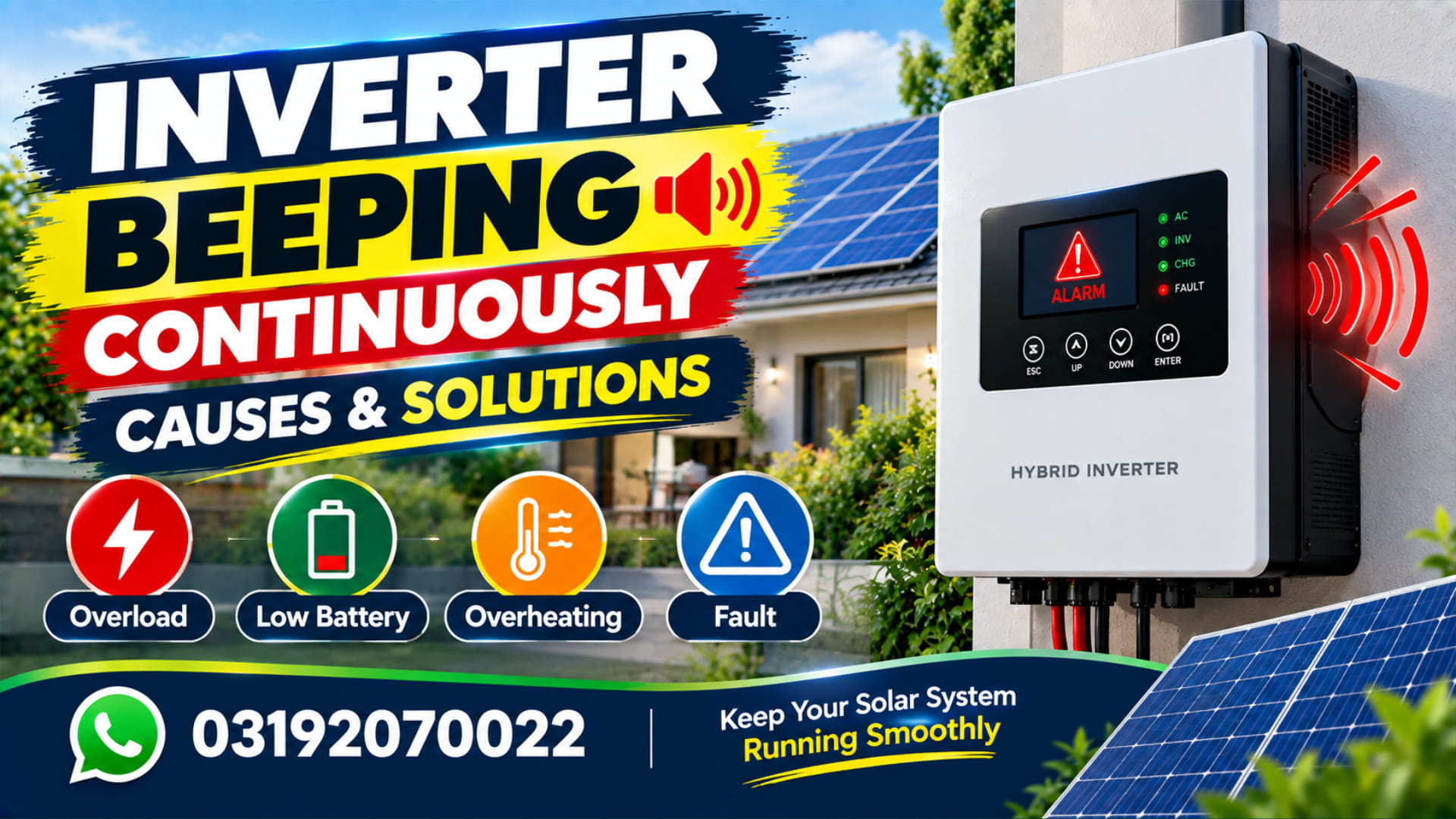
The beep is not random and it is not the inverter malfunctioning on its own. It is an alert, and in the large majority of cases it means the same thing every time: something has crossed a threshold the inverter was told to watch, and it wants your attention before the situation gets worse.
Most people’s first instinct is to find the mute button. That solves the noise. It does not solve whatever triggered it, and in the most common case, low battery voltage, muting the alarm while the underlying condition continues can mean the difference between a controlled shutdown and a battery discharged well past where it should ever go.
This guide walks through what continuous beeping usually means, in order of how often each cause actually turns out to be the answer, and how to tell them apart.
A Quick Note Before You Mute It
If the beeping started at the same time as a power outage, do not silence it and walk away without checking what it is telling you first. On many systems, continuous beeping during an outage means the battery is discharging and approaching a threshold where the inverter will cut load to protect the battery from damage. Muting the sound does not pause that process. Check the display for the actual battery percentage or voltage before deciding the noise itself is the problem.
The Most Common Cause: Low Battery Voltage Alarm
This accounts for the large majority of continuous beeping complaints, and it is worth understanding properly rather than just silencing.
Every inverter has a low battery threshold, a voltage below which the battery is considered too depleted for continued safe discharge. As the battery approaches that point, most units trigger an audible alarm well before the actual cutoff, giving you time to reduce load, start the generator, or simply accept that backup time is running out.
How to confirm this is the cause. Check the display for battery voltage or percentage. If it shows a low reading, particularly during a grid outage when the battery has been supplying the house for a while, this is almost certainly it.
Why it matters more than it sounds. Discharging a lead-acid battery significantly below its safe threshold on a regular basis is one of the fastest ways to shorten its life. A battery rated for several years of service can lose a meaningful fraction of that lifespan through repeated deep discharges. The beep exists specifically to stop that from happening, which is why silencing it without addressing the cause defeats its purpose.
What to do. Reduce load immediately, turn off anything non-essential, particularly air conditioners or heaters if either is running on battery. If grid power has returned, confirm the inverter is actually charging, since a persistent low battery alarm despite restored grid power can point to a charging fault rather than just a depleted battery. Our inverter not charging battery guide covers that specific situation if the alarm does not clear once power is back.
If this happens routinely rather than during occasional long outages, your battery bank may simply be undersized for how much backup you are asking it to provide. Our how many batteries for a 6kW inverter guide covers sizing a bank properly against your actual backup needs.
Second Most Common: Overload Warning
Some inverters beep as a warning before an overload trip actually occurs, giving you a chance to reduce load before the protection cuts output entirely. This is different from the low battery alarm in one important way: it usually resolves the moment you reduce load, rather than continuing until a battery recharges.
How to confirm this is the cause. Check whether the beeping started at the same moment as switching on a heavy appliance, particularly something with a motor, a water pump, a non-inverter air conditioner, or several appliances starting close together. If reducing load stops the beep immediately, this was the cause.
Our inverter overload error and fault codes guide covers this in detail, including the difference between a genuine sustained overload and a brief motor starting surge that only looks like one.
Third: Loose or Disconnected Battery Terminal
A poor connection at the battery terminal can cause voltage readings to fluctuate or drop intermittently even when the battery itself is healthy and reasonably charged. Some inverters interpret this as a low battery or fault condition and beep accordingly, sometimes intermittently rather than as a steady continuous tone, which is itself a useful clue.
How to confirm this is the cause. With the system safely powered down at the appropriate point, check that battery terminals are clean, tight and free of corrosion. A terminal that has worked loose from vibration or thermal cycling is a common and easily fixed cause, and one that is easy to overlook because the connection can look fine at a glance while carrying poor contact.
Fourth: Grid Failure Notification
On some UPS-style and hybrid inverters, a beep, sometimes a short pattern rather than continuous, sounds when the unit transfers from grid to battery power during an outage. This is a notification, not a fault, and it is telling you the system is working exactly as designed.
Where this becomes continuous rather than a brief transfer tone depends heavily on the specific model and its settings. Some units allow this notification to be adjusted or silenced in the settings menu without affecting the low battery alarm, which is worth checking if you find the transfer beep more disruptive than useful, particularly for a household with a baby or someone working night shifts.
Fifth: Thermal or Fan Warning
Some inverters beep as a warning before a thermal shutdown, indicating internal temperature has risen beyond the normal operating range. This is frequently linked to a failed or failing cooling fan, dust blocking ventilation, or the unit being installed somewhere hotter than its rating allows.
How to confirm this is the cause. Check whether the inverter’s enclosure feels unusually hot to the touch, whether the internal fan is audibly running when you would expect it to be under load, and whether the mounting position has adequate airflow. A unit installed in a sealed cupboard or exposed to direct afternoon sun is a common contributor here.
This cause is worth taking seriously rather than muting and ignoring, since continued operation at elevated internal temperature accelerates component wear across the whole unit, not just whatever triggered the immediate warning.
Sixth: A Fault Requiring Acknowledgment
Many inverters are designed so that once a genuine fault condition occurs, overload, over-temperature, a battery fault, the alarm continues until a physical button is pressed to acknowledge it, even if the underlying condition has since resolved itself. This is a deliberate design choice, intended to make sure a fault does not go unnoticed simply because the condition that caused it was brief.
How to confirm this is the cause. Check the display for a fault code or history log, if your model has one, even if the beeping has been going on for a while after whatever triggered it. Pressing the dedicated mute or acknowledge button, distinct from switching the unit off entirely, often clears this type of alarm once the underlying issue is genuinely resolved.
Seventh: Buzzer Sensitivity or Settings
Less common, but worth checking if none of the above fits. Some inverters allow the low battery alarm threshold, or the buzzer’s sensitivity generally, to be adjusted in the settings menu. A threshold set too high relative to your actual battery bank’s normal operating range can trigger alarms during what is otherwise completely normal discharge behaviour.
This is more likely to be the explanation if the beeping started immediately after a firmware update, a battery replacement where the settings were not reconfigured to match the new battery type, or a technician visit where settings may have been adjusted.
Eighth: A Hardware Fault in the Buzzer Itself
Rare, but it happens. A buzzer that has developed an internal fault can sound continuously regardless of the actual system state, essentially stuck rather than reporting anything real. This is more likely if the beeping bears no relationship whatsoever to battery voltage, load, or temperature that you can identify, and the unit otherwise appears to be operating completely normally.
This is a hardware issue rather than something you can resolve through settings, and it typically needs a technician or a warranty claim to address properly.
How to Actually Stop the Noise
Most inverters have a dedicated mute or silence button, separate from the power switch, specifically for acknowledging an alarm without shutting the system down. Use this once you have identified and, where possible, addressed the underlying cause.
If you mute an alarm without knowing what caused it, check back within a reasonable window to confirm the condition has genuinely resolved rather than assuming silence means the problem went away. A muted low battery alarm still means a battery that is discharging, whether or not you can hear it.
If the beeping resumes shortly after muting, that is useful information in itself. It usually means the underlying condition, low battery, overload, thermal, is ongoing rather than a one-off event, and points you back toward whichever cause above matches the pattern.
When Continuous Beeping Is Actually Fine
Worth stating plainly: an inverter beeping briefly during a genuine grid failure, when it correctly and safely transfers to battery power, is doing exactly what it should. The same goes for a brief warning tone during a legitimate motor starting surge that resolves on its own without tripping anything.
The distinction that matters is whether the beeping is proportionate to something genuinely happening, an actual outage, an actual overload, an actual low battery, versus a beep with no clear trigger, or one that continues well past when the triggering condition should have resolved. The first is the system working. The second is worth investigating.
Preventing Recurring Alarms
Keep the battery within a healthy charge range. Repeated deep discharges are the most common cause of chronic low battery alarms, and addressing backup habits, or the size of the battery bank relative to what you ask of it, solves the alarm at the source rather than just muting it each time.
Check terminal connections periodically, more often in humid or coastal areas where corrosion develops faster.
Keep the inverter ventilated and free of dust. A unit running hot due to poor airflow is more likely to trigger thermal warnings under load it would otherwise handle without complaint.
Avoid stacking heavy appliance startups. If overload warnings are a recurring pattern rather than an occasional event, staggering when large appliances switch on reduces momentary demand spikes. Our complete inverter sizing guide is worth revisiting if this happens often enough to suggest the system itself is undersized for your actual load.
Update battery type settings after any battery change. A mismatch between the configured battery type and what is actually connected is a common, avoidable cause of false alarms.
When to Call a Technician
Call rather than continue investigating yourself if: the beeping continues with no identifiable trigger and does not match battery voltage, load or temperature readings on the display, muting the alarm does not stop it or it resumes within seconds, the alarm coincides with a burning smell or visible damage, or you suspect a hardware fault in the buzzer itself after ruling out every condition-based cause above.
Current stock and specifications for a replacement unit, if the underlying issue turns out to be a hardware fault beyond repair, are on our products page.
Almost always a low battery alarm as the battery discharges to support the house, or in some models, a notification tone confirming the transfer to battery power. Check the displayed battery percentage or voltage to tell the two apart.
Only once you know what caused it. Muting a low battery alarm without addressing the underlying discharge does not stop the battery from continuing to drain, and repeated deep discharges shorten battery life significantly.
Likely an overload warning triggered by the AC’s starting surge, particularly if it is a non-inverter model. If the beep stops once the AC is running steadily, this is very likely the cause.
Check for a loose or corroded battery terminal, which can cause the inverter to misread the actual battery condition. Also check for an unacknowledged fault in the display history, since some alarms persist until manually cleared even after the triggering condition resolves.
Address the underlying cause rather than only muting the alarm. If it is a genuine recurring condition, low battery, overload, thermal, fixing that condition, adjusting your usage, upgrading battery capacity, or resolving a wiring issue, stops the alarm from returning.
Some inverters allow the low battery threshold or buzzer sensitivity to be changed in the settings menu. Check your specific model’s manual, since not all units offer this and getting it wrong can leave you without adequate warning before a genuine cutoff.
Not necessarily, and in most cases it is a warning about an external condition, battery, load or temperature, rather than internal damage. A hardware fault in the buzzer itself is possible but comparatively rare.
Yes, this points to a recurring pattern worth addressing rather than a one-off event, most often either an undersized battery bank for the backup you are asking of it, or a charging issue preventing the battery from returning to a healthy state during the day.
Still Beeping?
Tell us when it started, whether it coincides with a specific appliance, an outage, or nothing you can identify, and what the display shows for battery voltage or any fault code. That is usually enough for us to narrow down the cause before arranging a technician visit if one is needed.
WhatsApp 03192070022 for troubleshooting help.
This guide covers general alarm behaviour common to most hybrid and UPS-style inverters sold in Pakistan. Exact beep patterns and their meanings vary between manufacturers, so always check your specific model’s manual for precise alarm definitions.